
What is an Alternative to a Bollard? Why No Substitute Matches Up for Commercial Security
When business owners in the GTA start researching perimeter security, they often ask: “What’s an alternative to a bollard?” It’s a fair question, especially when budget constraints, aesthetic concerns, or installation challenges come into play. While several vehicle barrier options exist, the reality is that for commercial properties requiring reliable, long-term security, there’s no true substitute for properly installed commercial bollards.
Let’s explore what’s available and why bollards remain the gold standard for commercial vehicle security.
The Common "Alternatives" to Bollards
Jersey Barriers
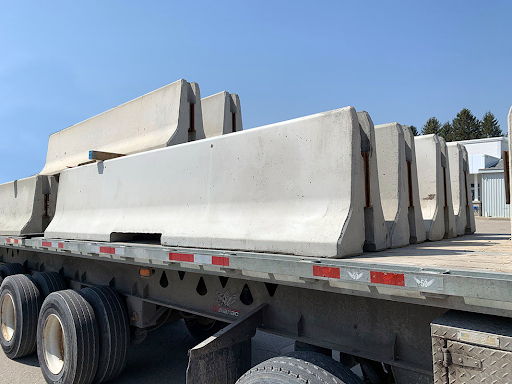
Originally developed in New Jersey in the 1950s, Jersey barriers (also called Jersey walls or K-rails) are modular concrete barriers standing approximately 32 inches tall. An interesting Canadian variant is the Ontario Tall Wall, which stands 42 inches tall and has been used by Ontario’s Ministry of Transportation on 400-series highways since the early 1990s.
Where They Work:
- Highway medians separating opposing traffic lanes
- Temporary construction zones requiring quick deployment
- Event crowd control and traffic channeling
- Emergency roadway diversions
Where They Fall Short: According to industry analysis, Jersey barriers are designed to redirect shallow-angle sideswipe collisions on highways, not stop head-on impacts. Their sloped design actually allows vehicle tires to ride up the lower face, minimizing sheet-metal damage—which means they’re built for deflection, not protection. For commercial properties needing to stop unauthorized vehicle access completely, this is a critical weakness.
Additionally, Jersey barriers are bulky, visually intrusive, and difficult to integrate into professional business environments. After Toronto experienced vehicle attacks, the city deployed Jersey barriers around Union Station and other high-traffic areas as temporary measures, but officials acknowledged these weren’t ideal long-term solutions.
Concrete Security Planters
Reinforced concrete planters serve a dual purpose: aesthetics and vehicle stopping power. When properly designed and positioned, security planters can prevent vehicle intrusion while enhancing the appearance of commercial properties.
Advantages:
- Blend security with landscaping
- Less visually aggressive than traditional barriers
- Can be crash-rated for specific protection levels
- Suitable for upscale retail, office buildings, and public spaces
Limitations:
- Require significant space and proper spacing
- Higher cost than traditional bollards
- More complex maintenance (plants, irrigation, seasonal care)
- Less flexible for access control needs
- Cannot be easily removed or relocated
Cable Barriers
High-tension steel cable barriers consist of multiple cables mounted on breakaway posts. They’re designed to absorb impact energy while preventing vehicle crossovers.
Typical Applications:
- Highway median separations
- Roadside protection on curves
- Agricultural and rural property boundaries
- Temporary or semi-permanent installations
Why They Don’t Work for Most Commercial Properties: Cable barriers need significant run length to function properly, typically 100+ feet. They’re designed for highway speeds and shallow-angle impacts, not for stopping vehicles attempting to breach a commercial property perimeter. For dealerships, warehouses, storefronts, and parking facilities, cable barriers simply aren’t practical or effective.
Why These "Alternatives" Aren't Really Alternatives
Here’s the fundamental problem: Jersey barriers, planters, and cable barriers weren’t designed to solve the same problems that commercial bollards address. They serve different purposes in different environments.
Consider what commercial properties actually need:
Precise Access Control: Bollards can be configured as fixed, removable, or retractable to allow authorized vehicle access while preventing unauthorized entry. Jersey barriers and cable systems don’t offer this flexibility.
Pedestrian Permeability: Bollards create semi-permeable boundaries that protect against vehicles while allowing foot traffic. Continuous barrier systems block everyone and everything.
Aesthetic Integration: Modern commercial bollards come in various designs that enhance rather than detract from professional environments. Jersey barriers communicate “construction zone,” not “established business.”
Space Efficiency: Bollards require minimal footprint, typically 4-12 inches in diameter with strategic spacing. Jersey barriers and planters consume significant valuable space.
Head-On Impact Protection: According to security barrier research, crash-rated bollards are specifically engineered for high-impact, head-on crashes, making them ideal for protecting buildings and pedestrian areas. Jersey barriers excel at redirecting shallow-angle collisions but aren’t designed to stop direct vehicular assaults.
The Real Cost of Choosing the Wrong Solution
Recent incidents have highlighted the importance of proper vehicle barriers. The CBC reported that after implementing bollards in downtown Kitchener, the city faced unexpected operational costs: clearing snow became more expensive because it had to be done by hand around the bollards. New York City budgeted $50 million for metal bollards in midtown, approximately $30,000 per bollard.
While these costs seem high, they pale in comparison to the potential consequences of inadequate protection:
- Vehicle crashes into buildings injuring employees or customers
- Theft of inventory when vehicles breach loading docks
- Liability lawsuits from preventable accidents
- Property damage requiring extensive repairs
- Business interruption and revenue loss
- Insurance premium increases
For auto dealerships, the stakes are even higher. A single vehicle theft can cost hundreds of thousands of dollars in inventory loss, not to mention the insurance complications and reputational damage.
What Commercial Properties Actually Need
For GTA businesses, whether you operate a dealership, warehouse, retail location, or commercial parking facility, the question shouldn’t be “What’s an alternative to bollards?” but rather “What type of bollards best suit my specific security needs?”
Auto Dealerships: Fixed or retractable bollards around perimeter and high-value inventory areas
Loading Docks: Protective bollards preventing accidental truck damage to building infrastructure
Storefronts: Crash-rated bollards protecting windows and entrances from vehicle intrusions
Parking Facilities: Strategic bollard placement controlling traffic flow and preventing wrong-way entry
Commercial Buildings: Removable or retractable bollards allowing emergency vehicle access while maintaining everyday security
The Bollard Boys GTA Difference
At Bollard Boys GTA, we’ve spent years helping commercial clients throughout Toronto and the GTA find the right bollard solutions for their specific security challenges. We understand that one size doesn’t fit all, which is why we offer comprehensive consultations to assess your property’s unique vulnerabilities and requirements.
Contact Bollard Boys GTA today for a free quote. We’ll assess your property, discuss your specific security concerns, and design a commercial bollard solution that provides real protection, not just a temporary workaround.
Because when it comes to protecting your business, there’s no substitute for doing it right the first time.