
Commercial Bollards in the GTA: Types, Uses and How to Choose
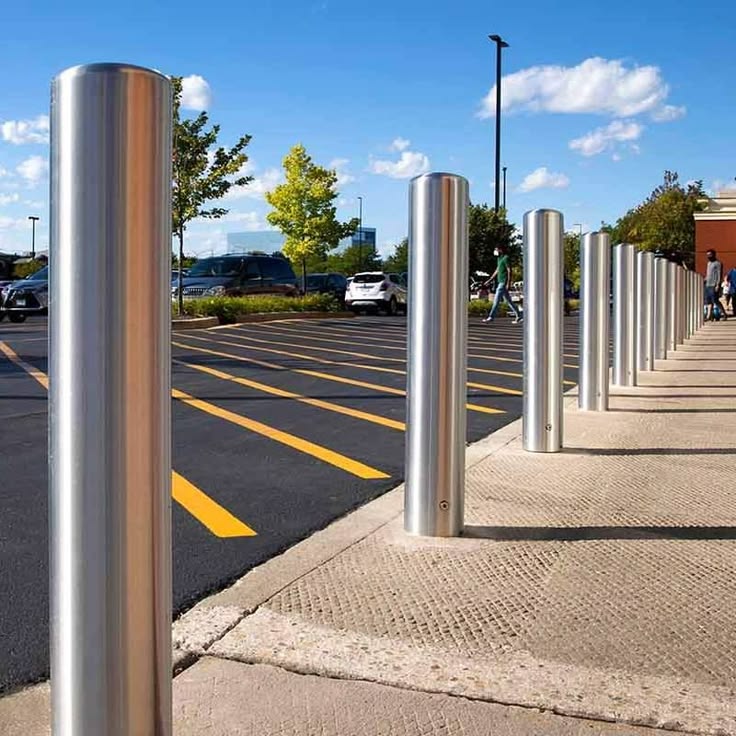
Walk through any plaza in Mississauga, Vaughan or Scarborough and you will see bollards everywhere. By the entrance. Beside the gas meter. Along the storefront. At the corner of the loading dock. Most people never think about them until a vehicle hits something it should not have.
If you manage a property or run a business in the GTA, choosing the right bollard is a practical decision with real money behind it. This guide explains the main types, what each one is built to do, and how to match them to your site.
Quick answer
Bollards fall into three broad groups. Safety bollards protect equipment and guide traffic at low speeds. Security bollards are heavier and anchored deeper to resist deliberate or accidental impacts. Crash-rated bollards are engineered and tested to stop vehicles at defined speeds. The right choice depends on what you are protecting, how fast a vehicle could realistically approach, and what the ground underneath can support.
The three main types
Safety bollards
These are the familiar steel pipes, often yellow, filled with concrete. They protect gas meters, electrical panels, door frames, handrails and loading doors from forklifts, delivery vans and parking mistakes. They are designed for low-speed contact in places where accidents are most likely.
They are not designed to stop a vehicle moving at speed. That matters, because a safety bollard can look similar to a stronger one from the outside.
Security bollards
Security bollards use thicker steel, larger diameters and deeper footings. They sit in front of storefronts, building entrances and pedestrian areas where a car could jump a curb or be driven toward the building. The foundation does much of the work, so installation quality matters as much as the post itself.
Crash-rated bollards
These are engineered systems tested against recognized standards, such as ASTM F2656, which rates barriers by vehicle weight and speed. Crash-rated products are usually specified for high-risk sites like government buildings, critical infrastructure and some large public venues. ASTM International publishes the standards.
Many GTA businesses do not need crash-rated barriers. Knowing that is as useful as knowing when you do.
Where bollards earn their keep
- Storefronts and plazas. Cars hitting front windows are more common than most owners expect, and often accidental, such as a driver pressing the wrong pedal.
- Gas, hydro and fire equipment. Meters, panels and hydrants are costly to repair and sometimes dangerous when damaged.
- Loading docks and warehouses. Forklifts and trucks clip doors, racking and corners constantly.
- Pedestrian zones. Patios, walkways and school or daycare entrances need clear separation from traffic.
- Drive-thrus and pick-up areas. Menu boards, windows and kiosks are easy to hit.
- EV chargers. Charging stations and cables are exposed to low-speed impacts in tight parking lots.
How to choose
Start with the risk
Ask what you are protecting and from what. A parked car backing into a meter is a different problem from a vehicle driven up a sidewalk. Be honest about speed, distance and what is at stake. If people are inside the space behind the barrier, that raises the bar.
Look at the approach path
A bollard works best when the vehicle has little room to build speed before reaching it. Long straight approaches, parking lot exits and sloped driveways all increase the force a barrier has to handle.
Check the ground
Underground utilities, shallow rock, drainage and existing slabs all shape how deep and how wide a footing can go. In Ontario, you must arrange utility locates before digging. Ontario One Call coordinates the process.
Frost also matters. Footings in the GTA are typically set to reach below the frost line so the post does not heave over winter. Your installer should confirm the right depth for your site.
Think about maintenance and access
Fire routes, snow removal, deliveries and accessibility all need to keep working. Removable and retractable bollards solve this for areas that need occasional vehicle access, though they cost more and need maintenance.
Check the rules
Bollards near buildings can involve the Ontario Building Code, municipal bylaws, fire route requirements and accessibility standards. Requirements vary by municipality and site, so confirm with your local building department before you install.
Material and finish
- Steel pipe, concrete filled. The standard choice for most commercial work.
- Stainless steel and decorative covers. Common where appearance matters, such as downtown storefronts and condo entrances.
- Cast iron or architectural styles. Used where heritage character is important.
- Plastic or flexible posts. Useful for guiding traffic, not for stopping impact.
Paint or powder coating protects against road salt, which is a real factor in Ontario. Reflective bands improve visibility at night.
Insurance considerations
Insurers may ask about physical protection around high-value or high-risk property. Policies differ, so ask your broker what they expect and what could affect your premium. The Insurance Bureau of Canada has general commercial insurance information.
A simple decision path
- Identify what needs protecting and who is behind it.
- Estimate the likely vehicle type and speed.
- Decide whether you need safety, security or crash-rated protection.
- Have the site checked for utilities, ground and drainage.
- Confirm local permit and bylaw requirements.
- Plan finish, visibility and maintenance.
Frequently Asked Questions
What is the difference between a safety bollard and a security bollard?
Safety bollards protect against low-speed bumps and guide traffic. Security bollards use heavier steel and deeper foundations to resist stronger impacts.
Do I need crash-rated bollards?
Only some sites do. High-risk or high-profile locations may require them. Many typical commercial properties are better served by well-installed security or safety bollards.
Can I install bollards myself?
Small, low-risk posts are sometimes installed by property owners, but proper footings, utility locates and anchoring matter a lot. A poorly installed bollard can fail when you need it.
How deep do bollard footings need to be?
It depends on the bollard, soil and local frost depth. Your installer should specify it for your site.
Do bollards need a permit?
Sometimes. Check with your municipality, especially near public sidewalks, fire routes or building entrances.
The bottom line
A bollard is only as good as its footing and its fit for the job. Matching the type to the real risk saves money and protects people and property.
Ready to protect your site? Contact Bollard Boys for a quote on bollard supply and installation across the GTA.
Request your GTA bollard quote today.