
Can I Put Bollards on My Driveway? Ontario Regulations Explained
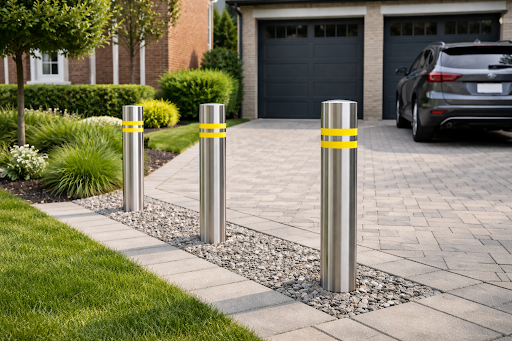
If you’re a homeowner in Toronto or the GTA considering driveway bollards to protect your vehicle from theft, you’re probably wondering: “Can I legally install bollards on my driveway?” The short answer is yes, but there are important regulations and guidelines you need to understand first.
The Legal Status of Driveway Bollards in Ontario
According to industry experts and municipal guidelines, residential driveway bollards are legal in Ontario, as long as they’re installed on your private property and don’t block public sidewalks or roads. This is the key distinction: what you do on your private property is generally allowed, but anything that extends into public property requires special permission.
Understanding Private vs. Public Property
Your driveway typically consists of two parts:
- Private Property: The portion of your driveway that sits entirely on your land (behind your property line)
- Public Right-of-Way: The section that crosses the municipal boulevard between your property line and the street
When installing driveway bollards, they must be placed on your private property, behind the property line. If you’re unsure where your property line is, you may need to contact a land surveyor to have a new survey completed to clearly delineate your property lines.
Toronto and GTA Municipal Requirements
While there’s no single federal law governing bollard installation in Canada, each municipality has its own bylaws and requirements. If your installation affects visibility near roads, blocks access to fire hydrants, or limits mobility access, you’re going to need approval.
When You DON'T Need a Permit
For most residential driveway bollard installations in Ontario, you typically don’t need planning permission or a permit if:
- The bollards are installed entirely on your private property
- They don’t obstruct pedestrian or vehicle sight lines
- They don’t block driveways or pose hazards to traffic
- They don’t interfere with fire hydrant access
- They maintain proper spacing for emergency vehicle access
When You MIGHT Need Approval
You should contact your local municipality if:
- Your bollards will be visible from or near public roadways
- Installation could affect sightlines at intersections or corners
- Your property has easements or shared access rights
- You have a mutual or shared driveway with a neighbor
- The bollards might interfere with utility access
Important Considerations for Shared Driveways
If you have a mutual or shared driveway, the situation becomes more complex. Mutual driveways are typically described in your property deed and often include easement rights that allow both neighbors legal access to the shared area.
Before installing bollards on a shared driveway, you should:
- Review your property deed and land title to understand any easement rights
- Check if there are mutual access agreements registered on your property
- Discuss plans with your neighbor and get written consent
- Ensure bollards won’t prevent their legal right to access the shared area
- Consider consulting a real estate lawyer, as obstructing a registered easement can lead to legal disputes
Best Practices for Compliant Driveway Bollard Installation
To ensure your driveway bollard installation is both legal and effective, follow these guidelines:
1. Verify Your Property Lines
The most critical step is confirming exactly where your private property ends and public property begins. Consider having a land surveyor place visible markers at the corners of your property to clearly delineate your property lines, making it easier for the installation team to place the bollards correctly.
2. Check Local Bylaws
Every Ontario municipality has different requirements. For example:
- Toronto: Falls under Toronto Municipal Code Chapter 743 for streets and sidewalks use
- Ottawa: Governed by the Private Approach By-law (2003-447)
- Other GTA municipalities: Mississauga, Brampton, Markham, and Vaughan each have their own bylaws
Contact your local bylaw department or building code office to confirm specific requirements for your area.
3. Maintain Proper Spacing and Visibility
Most areas require bollards to be spaced at least 900 mm apart and to include high-contrast markings for visibility. This ensures:
- Emergency vehicles can access your property if needed
- Visibility is maintained for drivers and pedestrians
- Compliance with accessibility requirements
4. Consider Professional Installation
While some homeowners attempt DIY installation, professional installers offer significant advantages:
- Knowledge of local bylaws and regulations
- Proper placement to avoid property line issues
- Compliance with municipal spacing requirements
- Quality installation that won’t require costly corrections
Types of Driveway Bollards Available in Ontario
Different bollard types suit different needs and regulatory requirements:
Fixed Bollards: Permanent posts that provide constant protection. Best for properties where access doesn’t change.
Removable Bollards: Can be taken out when needed. Ideal for occasional guest parking or larger vehicle access.
Retractable Bollards: Lower into the ground when not in use. Perfect for homeowners who want flexibility without removing posts entirely. Available in manual, semi-automatic, or battery-powered options.
Each type is legal in Ontario when properly installed on private property. Your choice depends on your specific security needs, budget, and how frequently you need vehicle access.
What Happens If You Don't Follow the Rules?
Installing bollards without proper consideration for regulations can result in:
- Fines from your municipality
- Forced removal of improperly placed bollards
- Legal disputes with neighbors (especially with shared driveways)
- Liability issues if bollards cause accidents or block emergency access
- Complications when selling your property
If you installed bollards without checking regulations first, you could be fined or forced to remove them. It’s always better to verify requirements before installation rather than dealing with compliance issues afterward.
The Bottom Line for Ontario Homeowners
Yes, you can put bollards on your driveway in Ontario—with some important caveats:
✓ Install only on your private property ✓ Ensure proper spacing and visibility ✓ Don’t block emergency access or public right-of-way ✓ Get neighbor consent for shared driveways ✓ Check with your municipality when in doubt
With vehicle theft rising across the GTA, driveway bollards offer one of the most effective physical deterrents available to homeowners. When installed properly and in compliance with local regulations, they provide reliable, long-term protection for your vehicle.
Get Expert Help with Your Driveway Bollard Installation
At Bollard Boys GTA, we specialize in selling and installing driveway bollards throughout Toronto and the GTA surrounding areas. Our team understands local bylaws and regulations, ensuring your installation is compliant, effective, and worry-free.
Don’t risk fines, forced removal, or legal issues by going it alone. Contact Bollard Boys GTA today for a free quote.