
How to Protect a Storefront From Vehicle Crashes in the GTA
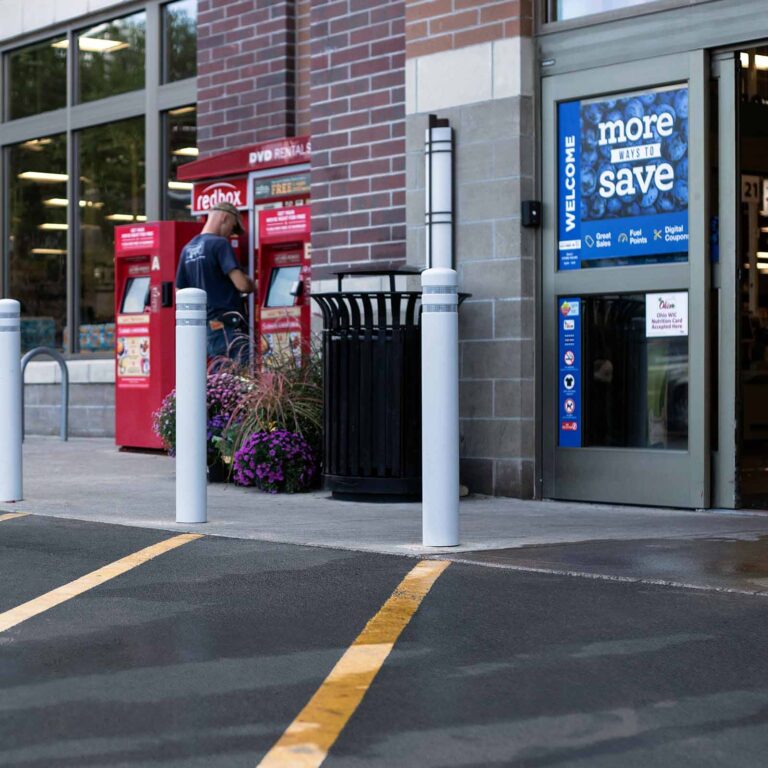
Most vehicle crashes into storefronts are not dramatic. A driver mixes up the gas and brake while parking. A senior pulls forward too far. A delivery truck backs up without seeing the curb. The result is the same: a car inside a shop, damaged property, and sometimes injured people.
If you own or lease a storefront in the GTA, this is a risk worth understanding. The good news is that it is one of the more preventable ones.
Quick answer
Storefronts are protected from vehicle impact by placing properly anchored bollards between the parking area or road and the building. The bollards need to be spaced so vehicles cannot pass between them, set on deep footings, and matched to the speed and weight of vehicles that could realistically reach them. A professional site assessment is the most reliable way to get the placement right.
Why storefronts are vulnerable
Strip plazas and street-front stores in the GTA share a few traits:
- Parking directly in front of the glass. Nose-in stalls point cars at the window.
- Short setbacks. There is often only a few metres between the curb and the door.
- Large glass fronts. Glass gives way easily, and it offers no real resistance.
- Busy lots. Tight turning, pedestrians and deliveries raise the chance of mistakes.
- No barrier at all. Many older plazas simply rely on a painted line or a concrete curb.
A curb stops very little. A moving car climbs it easily.
The risk is mostly accidental
Most crashes into storefronts are unintentional. Drivers press the wrong pedal, medical emergencies happen, and winter conditions make braking harder. That is useful to know, because it means the solution is not about assuming bad intent. It is about creating a physical barrier that protects people who are inside, whatever the cause.
Deliberate vehicle impacts also happen, including thefts where a vehicle is used to break into a business. Police services publish general crime prevention guidance for businesses. Bollards help in both cases, because they remove the open path from the road to the glass.
What good protection looks like
Placement
Bollards should sit between the likely vehicle path and the building. They are usually installed along the front edge of the sidewalk or just inside the parking line. They should be placed so the gap between them is too narrow for a vehicle but wide enough for pedestrians, strollers and wheelchairs to pass.
Spacing and accessibility
Ontario accessibility rules and local bylaws affect how closely bollards can be placed and how they must be marked. A site visit helps avoid creating a barrier for people who need to get through.
Strength
Steel bollards filled with concrete and anchored on deep footings are the most common solution for storefronts. The footing is the key part. A strong post on a weak base can bend or pull out of the ground. Heavier-duty or crash-rated systems are available for higher-risk sites.
Visibility
Bollards should be visible in daylight, at night and in snow. Reflective bands, bright finishes and lighting help drivers see them and help avoid impact in the first place.
What to check before installing
- Underground utilities. Ontario law requires locates before digging. Ontario One Call coordinates them.
- Property ownership. In a plaza, the landlord may control the lot. Get approval first.
- Municipal rules. Sidewalks, fire routes and building entrances may have bylaw or permit requirements. See the Ontario Building Code for general context.
- Snow removal. Plan for plows and snow storage so crews do not damage the bollards, and the bollards do not slow clearing.
- Drainage and slope. Water pooling around footings can accelerate rust and frost damage.
Costs and what drives them
The price of a bollard project depends on the number of posts, their size and rating, the footing depth, ground conditions, finish, and whether concrete or asphalt has to be cut and repaired. A quote based on a site visit is much more reliable than a generic estimate.
It helps to compare that cost with the cost of a single crash: structural repairs, broken glass, lost sales while closed, higher premiums and, worst of all, injured staff or customers.
Insurance and liability
Property owners and tenants generally have duties to keep premises reasonably safe. Insurers may take physical protection into account, and a claim can raise questions about what precautions were in place. Ask your broker how bollards might affect your coverage or premiums. The Insurance Bureau of Canada has general guidance.
A simple checklist
- Walk the front of your property and note where cars park and turn.
- Identify any glass, doors or equipment directly in the line of travel.
- Ask your landlord or property manager what is already in place.
- Book a site assessment to plan placement, spacing and footings.
- Add visibility features and confirm snow removal access.
- Keep a record of the installation for your insurer.
Frequently Asked Questions
How common are cars crashing into stores?
It is a recurring problem across Ontario and elsewhere, and most cases are accidental. Even a low-speed impact can injure people and damage a building.
Will a few bollards actually stop a car?
Properly sized and anchored bollards can stop many vehicles at the speeds typical for parking lots. Faster or heavier threats require higher-rated systems.
Do bollards block customers from entering my shop?
No. Good spacing leaves walkways clear for pedestrians and accessibility devices while blocking vehicles.
Who pays, the landlord or the tenant?
It depends on your lease. Review it, then talk to your landlord or property manager.
How long does installation take?
Small projects can be done in a day or two, depending on weather, locates and ground conditions. A site visit gives a better timeline.
The bottom line
A storefront crash is rarely planned, but protecting against it is. A few well-placed, properly installed bollards are one of the simplest ways to protect the people and property behind your glass.
Bollard Boys supplies and installs bollards across the GTA. Contact them for a site assessment and quote.
Request your storefront protection quote today.