
Property Security for Commercial Buildings: Protecting Entrances, Patios and Parking From Vehicles
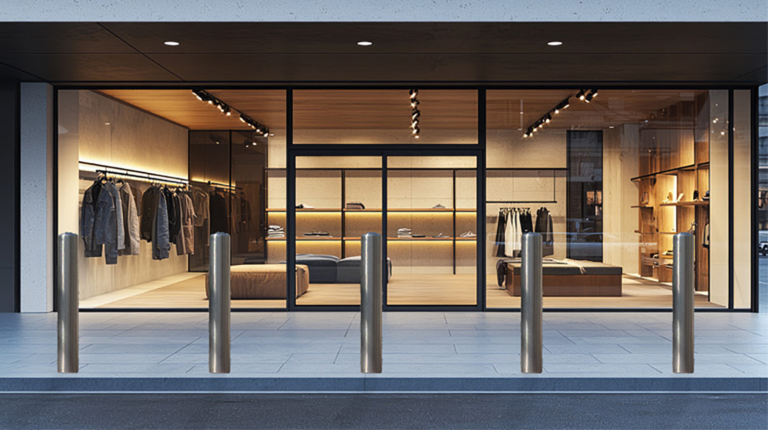
When property managers think about security, they usually think about cameras, access cards, alarm monitoring and guards. Those protect against people. There is another risk that walks right past all of them: a vehicle leaving the parking lot and ending up inside the building.
Sometimes it is deliberate, like a smash-and-grab or a ram-raid. Much more often it is an accident: a driver hits the gas instead of the brake while pulling into a spot facing the front doors. Either way, the result is the same. Damage, closures, insurance claims and, too often, injuries.
Quick Answer: What Is the Best Way to Protect a Building From Vehicles?
The most reliable way is to place bollards between vehicle areas and the places people gather or the building is exposed: entrances, storefront glass, patios, walkways and utility equipment. Fixed bollards protect permanently, removable and retractable bollards keep access open when needed, and crash-rated bollards are used where higher speeds or deliberate attacks are a concern.
How Often Vehicles Hit Buildings
There is no national Canadian dataset for these crashes, because most happen on private property. The best available numbers come from the U.S.-based Storefront Safety Council, which has tracked vehicle-into-building crashes since 2014. Its data shows these crashes happen more than 100 times per day in the United States, and that close to half result in an injury.
According to ASIS International’s Security Management magazine, the council estimates up to 2,600 people are killed and up to 16,000 injured each year in these crashes, and believes it captures only about one in 12 incidents. The causes range from pedal confusion to medical emergencies to drivers who intend to drive through the front window.
The GTA has the same building types those numbers come from: plazas with nose-in parking facing glass storefronts, restaurants with patios beside drive aisles, and office lobbies at the edge of busy lots.
Where Commercial Properties Are Most Exposed
Nose-in parking facing the building
Spaces that point straight at a storefront or entrance are the most common setting for these crashes. One wrong pedal and the vehicle is through the glass.
Main entrances and vestibules
Entrances concentrate people, and they are often all glass.
Patios and outdoor seating
Restaurant and café patios placed beside parking or drive aisles put customers within a few feet of moving vehicles.
Walkways and drop-off areas
Pickup zones and walkways next to drive lanes need a physical separation, not just paint.
Utilities and equipment
Gas meters, transformers, generators and EV chargers are expensive to replace and can create a second hazard if they are hit.
Choosing the Right Bollards for Each Area
- Fixed bollards for storefronts, entrances, walkways and equipment that never need vehicle access.
- Removable bollards for areas that occasionally need access, like a fire route, deliveries or maintenance vehicles.
- Retractable bollards for controlled access points used more often.
- Crash-rated bollards for high-value or high-risk frontages, longer run-ups where vehicles can reach speed, and sites concerned about deliberate attacks. These are tested to the ASTM F2656 standard.
Our types of commercial bollards page covers the options in more detail.
A Property Security Checklist for Managers
- Walk the site and mark every place where a vehicle could reach a door, window, patio or walkway.
- Note which of those spots face nose-in parking or a long, straight approach.
- Identify which areas need occasional vehicle access, such as fire routes or loading.
- Check for utilities and equipment beside drive aisles.
- Match each area to fixed, removable, retractable or crash-rated protection.
- Plan for upkeep, including snow clearing around bollards and servicing moving parts.
Why It Pays Off
A single vehicle-into-building incident can mean structural repairs, glass replacement, closed units, lost rent, insurance claims and liability exposure. Bollards are a one-time installation that protects against all of that across the life of the property. They also show tenants and their customers that the property is managed with safety in mind.
For ongoing protection, our Bollard Care plans cover scheduled service visits, and the Care+ plan adds accidental damage coverage and priority emergency response.
Frequently Asked Questions
How common are vehicle-into-building crashes?
U.S. data from the Storefront Safety Council shows they happen more than 100 times a day there. No equivalent Canadian dataset exists, but GTA plazas, restaurants and offices share the same layouts.
What causes most storefront crashes?
Driver error, including pressing the gas instead of the brake, is a leading cause. Medical emergencies and deliberate attacks also play a part.
Do I need crash-rated bollards for my property?
Not always. Standard fixed bollards suit many low-speed parking areas. Crash-rated bollards make sense where vehicles can build up speed or where deliberate attacks are a concern.
Can bollards be installed without closing the property?
Yes. Installations are typically phased so entrances and parking stay usable.
Do bollards block fire routes?
They should not. Removable or retractable bollards are used where emergency access is needed.
Protect the Building, the Tenants and the People Inside
Bollard Boys GTA designs and installs commercial bollards for plazas, offices, restaurants and mixed-use properties across the GTA.
Get a free quote or call 647-540-4466.